ARitize Holograms
Led 0-to-1 AR Platform Through Nextech AR Acquisition
0-to-1 Leadership
Startup → Acquisition
Designer → PM
Joined as sole designer on 4-person team. Led product from concept to App Store launch, attracted enterprise acquisition, promoted to Product Manager, and scaled team from 4 to 15+ people.
Role
Sole UX Designer → Product Manager
Timeline
2020 to 2022
Team
4-person startup → 15+ post-acquisition
Tools
Figma · Atlassian Suite · Framer
In 2020, AR technology existed, but it was inaccessible to average users. Creating AR content required technical expertise, expensive equipment, or complex software. We set out to build something different: an AR platform where anyone could create and share human holograms in minutes, not hours.
The challenge wasn't the technology. It was making it feel effortless.
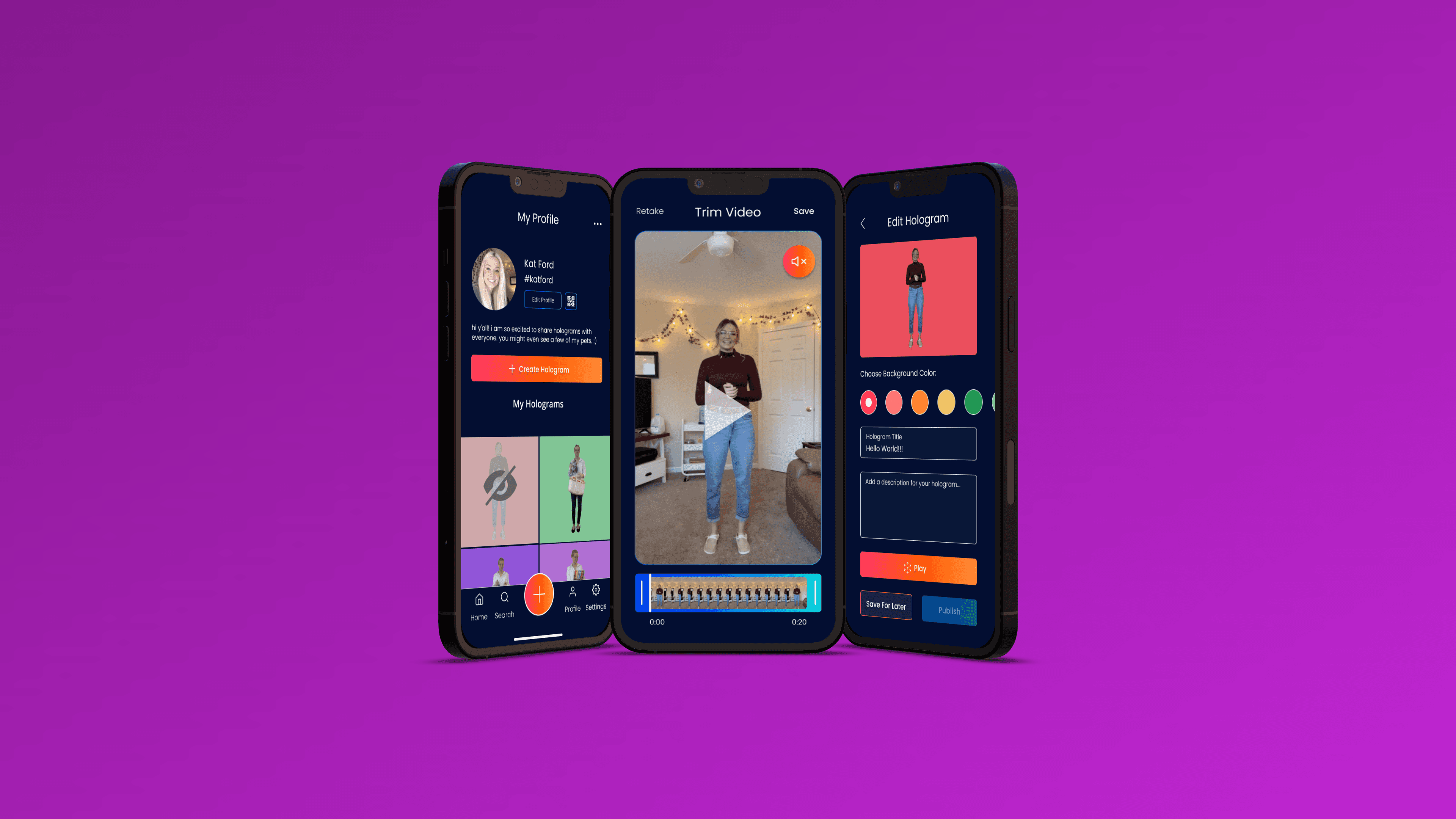
As sole UX designer, I designed the entire product experience for what became ARitize Holograms (originally launched as AiR Show). The core innovation was radical simplicity: users could record themselves on their phone, and the app would instantly convert that video into a placeable AR hologram.
The design principle: If users need instructions to create their first hologram, we failed.
I designed:
Onboarding flow that got users to their first hologram in under 2 minutes
Recording interface that felt like using a phone camera (because it was!)
AR placement system with automatic ground detection
Sharing functionality that let users distribute holograms via link
The result? Technology that felt like magic, but functioned like a basic camera app.
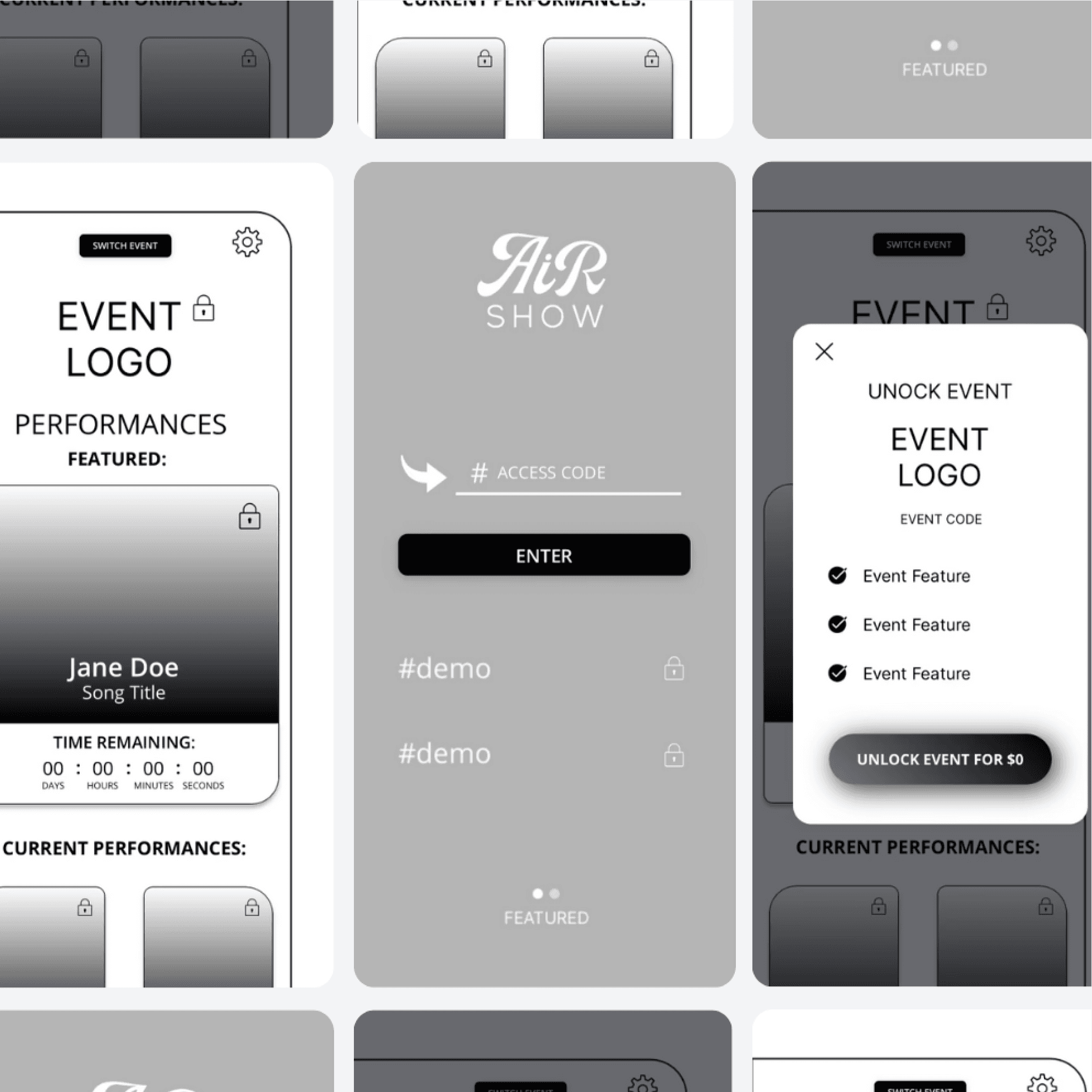
Early wireframes explored a ticketing-first model before user research showed the core value was hologram creation.
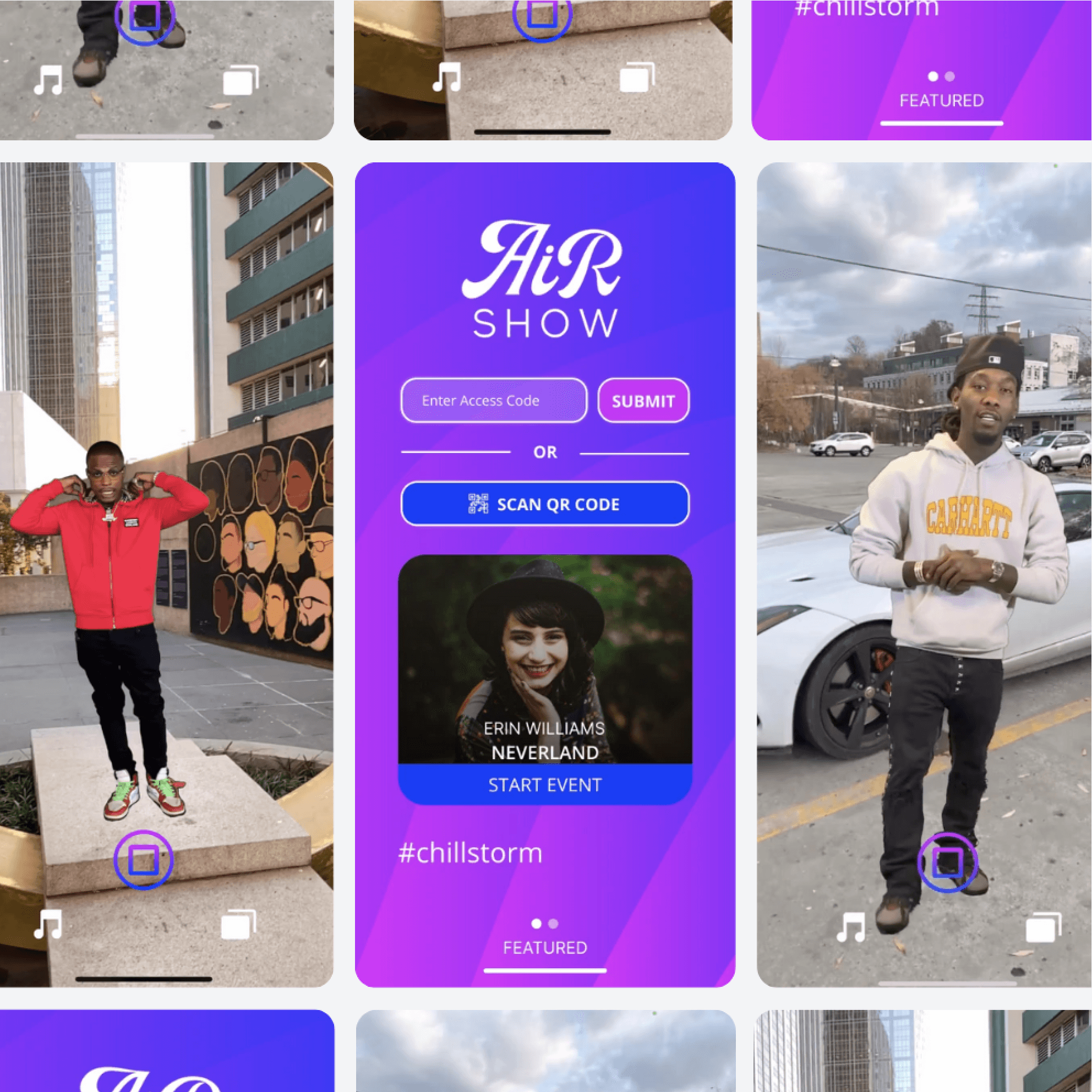
AiR Show initial design showcasing virtual concert experience featuring rapper Offset
The entire creation flow was designed around one principle: if it feels technical, we haven't simplified it enough.
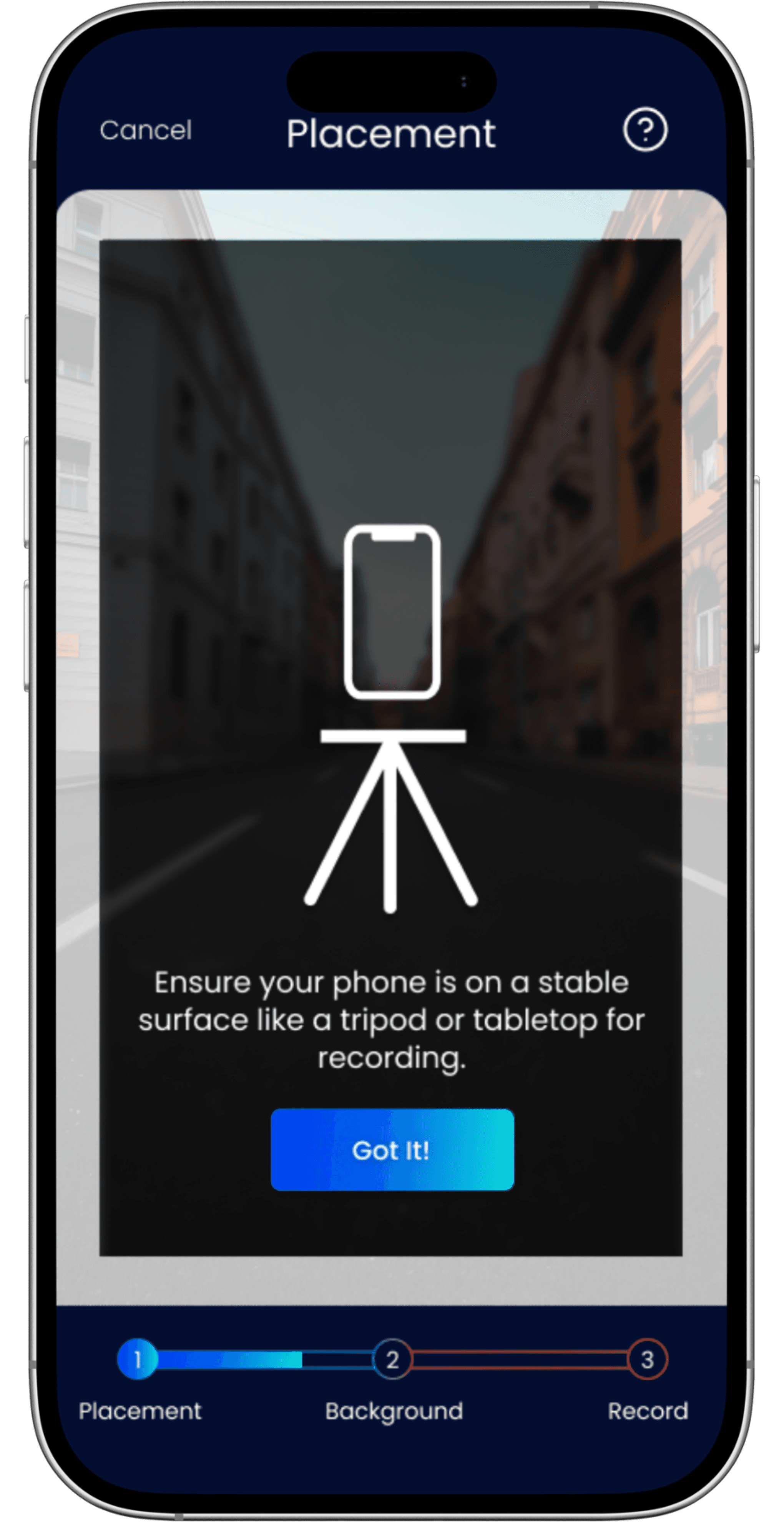
Design Decision
We required a stable surface instead of handheld recording. This added a setup step but dramatically improved hologram quality. The tradeoff was worth it: a slightly longer flow produced results users actually wanted to share.
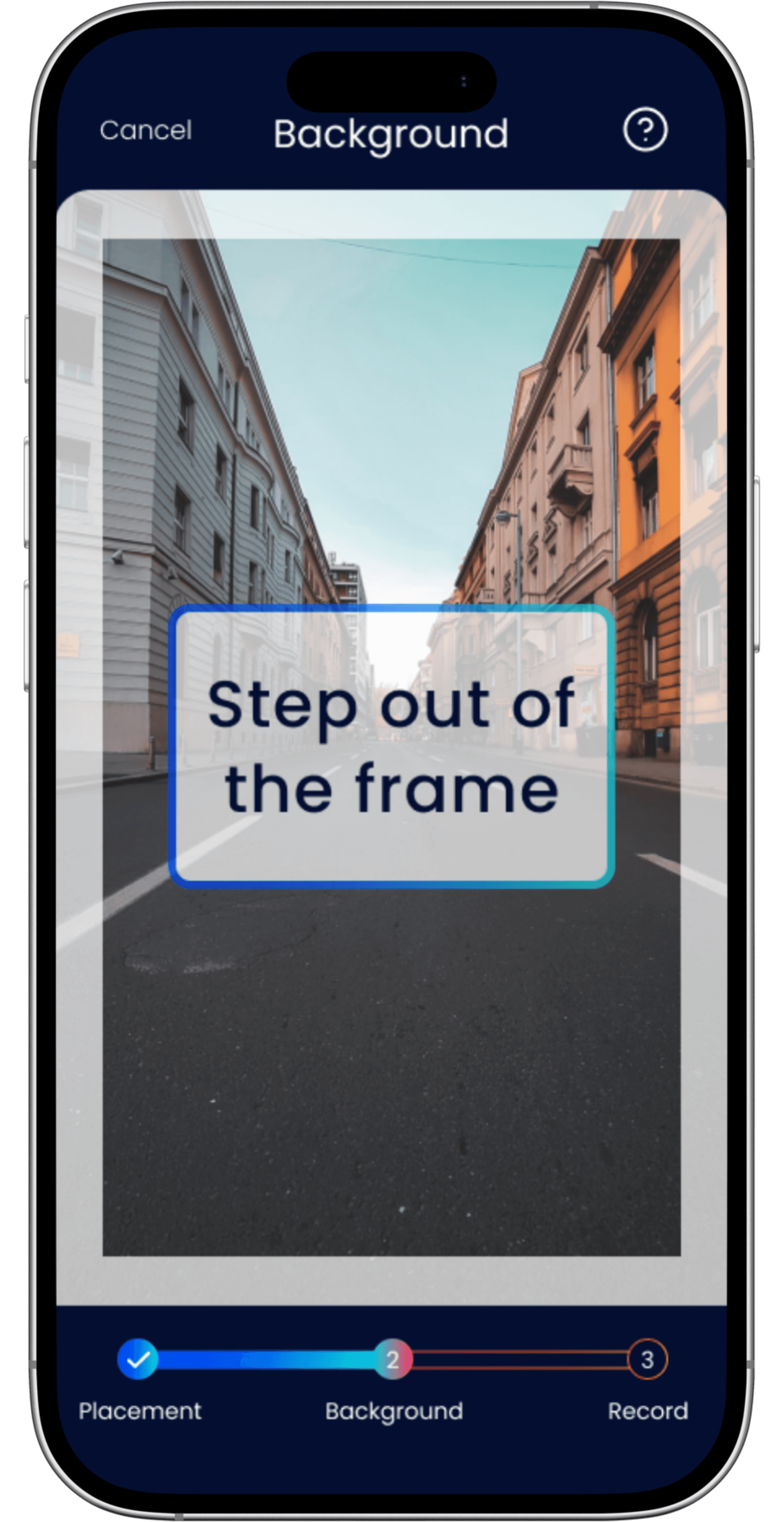
Design Decision
This was the hardest step to make intuitive. The app needs an empty background to isolate the user. I used a countdown timer and clear visual prompts so it felt guided rather than technical.
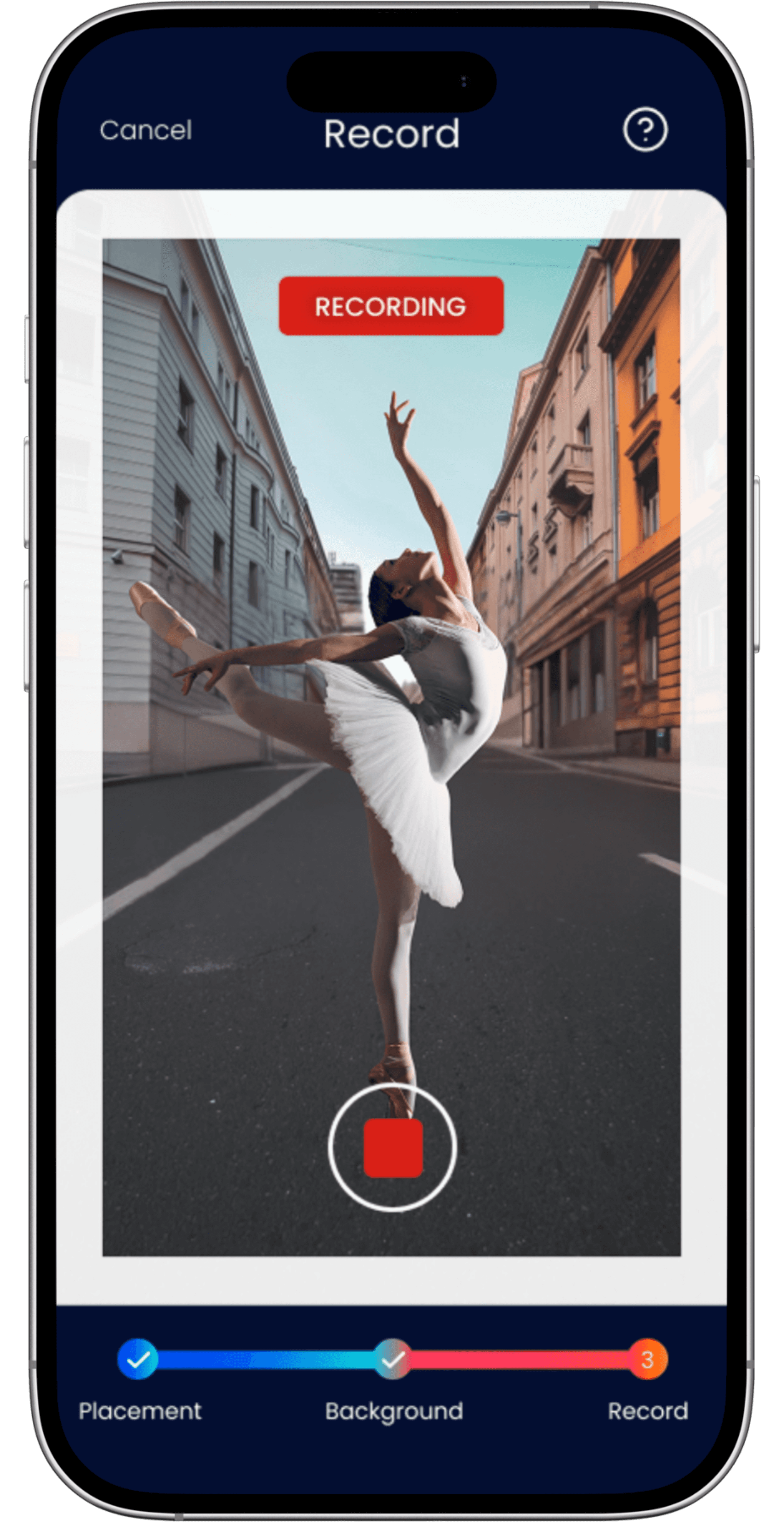
Design Decision
We kept the recording interface as close to a native camera as possible. Users already know how to record video. The only addition was a full-body frame guide to ensure the hologram would render correctly. After recording, users trim their clip and the app processes it automatically.
Just a couple of months after launch, Nextech AR acquired our 4-person team. Post-acquisition, CEO Evan Gappelberg articulated what made the product valuable:
"Our goal to allow anyone to create and share their own augmented reality human hologram using just a smartphone is the key step towards mass adoption."
— Evan Gappelberg, CEO, Nextech AR Solutions
While competitors were building complex AR creation tools for professionals, we'd built something anyone could use, regardless of technical background. That simplicity drove the acquisition.
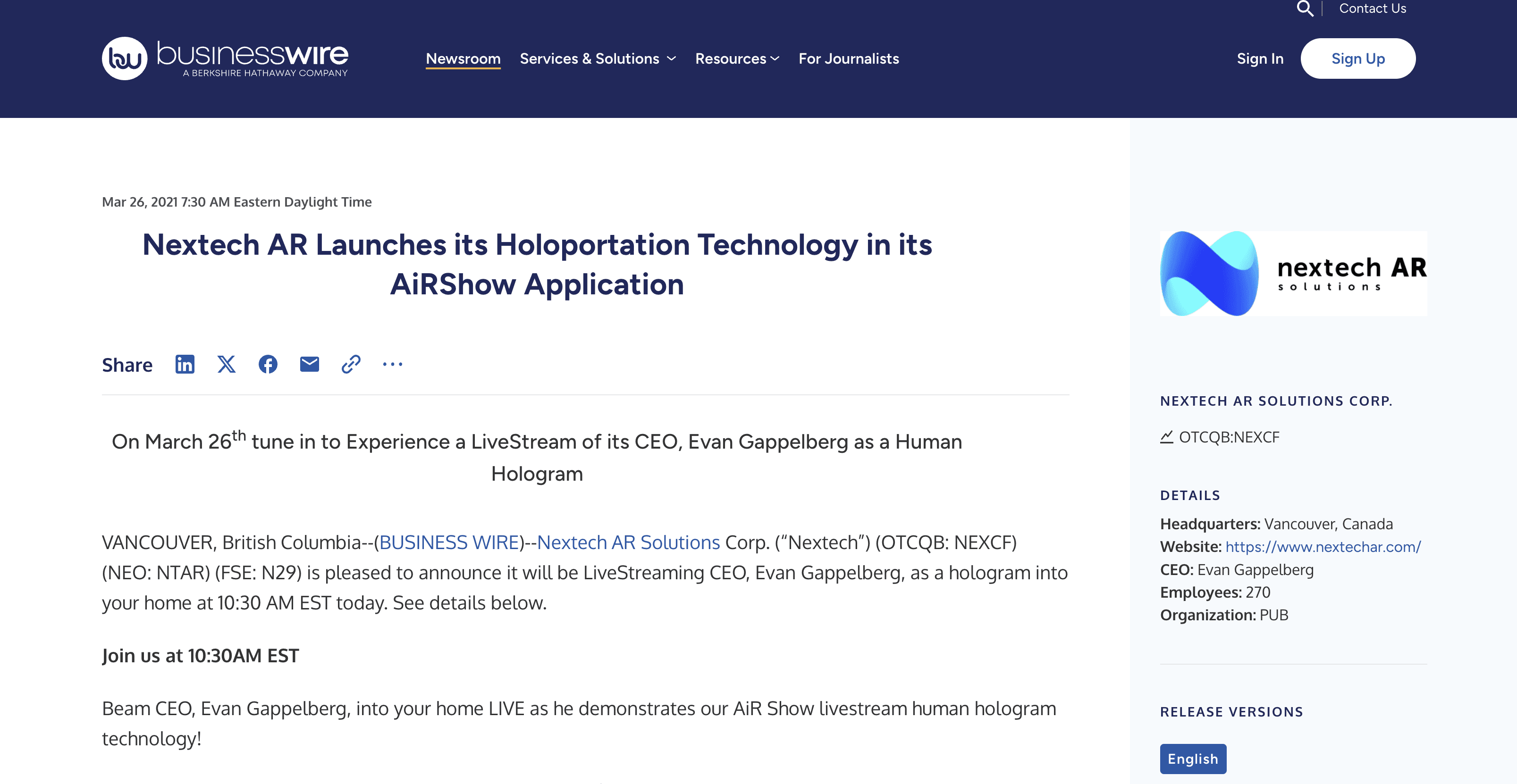
Screenshot of press release following the acquisition
Key outcomes that drove acquisition:
App Store and Google Play launch with consumer and enterprise traction
Celebrity clients including Offset (Migos) using the platform
Proven product-market fit in both B2C and B2B segments
Post-acquisition, I was promoted to Product Manager. My role expanded from designing the product to leading its evolution across the organization.
What changed:
Facilitated daily standups across design, engineering, and marketing teams (grew from 4 to 15+ people)
Prepared and presented product roadmaps to C-suite executives
Wrote PRDs translating business objectives into technical requirements
Led the complete rebrand from AiR Show to ARitize Holograms
Oversaw platform expansion to Microsoft HoloLens
The promotion recognized something important: the designer who understands why users need something is often best positioned to lead what gets built next.
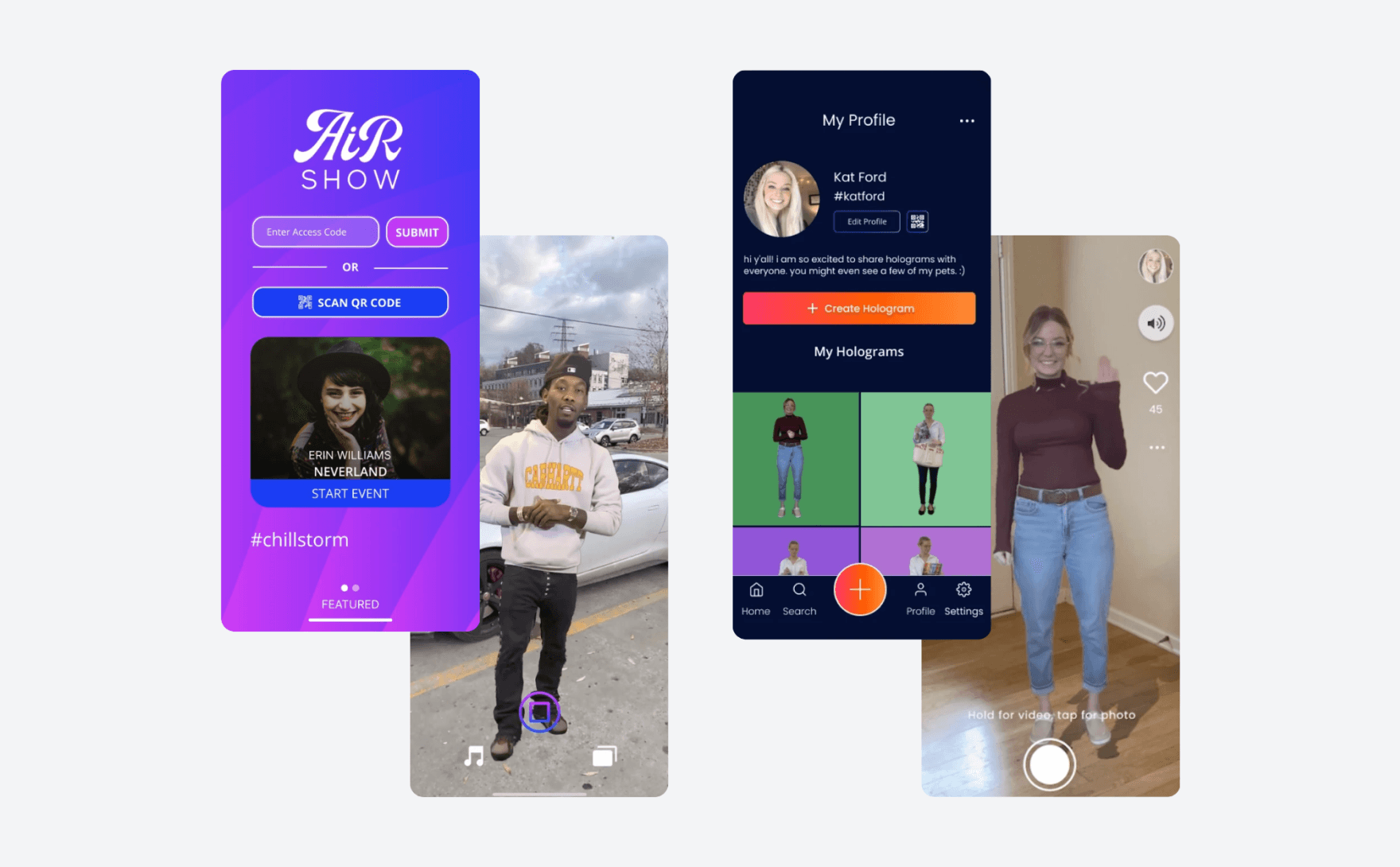
Design evolution from AiR Show music platform to ARitize Holograms general hologram creation tool following company acquisition. The rebrand wasn't just visual, it reflected the product's evolution from a concert-focused novelty to a general-purpose hologram creation platform.
Product
0-to-1 AR platform from concept to acquisition
App Store launch across iOS
Platform expansion to Microsoft HoloLens
Team
Scaled from 4-person team to 15+ person product organization
Promoted from sole designer to Product Manager
Led cross-functional teams post-acquisition
Business
Team acquired by publicly-traded Nextech AR
Enterprise and celebrity client adoption
Press coverage and industry recognition
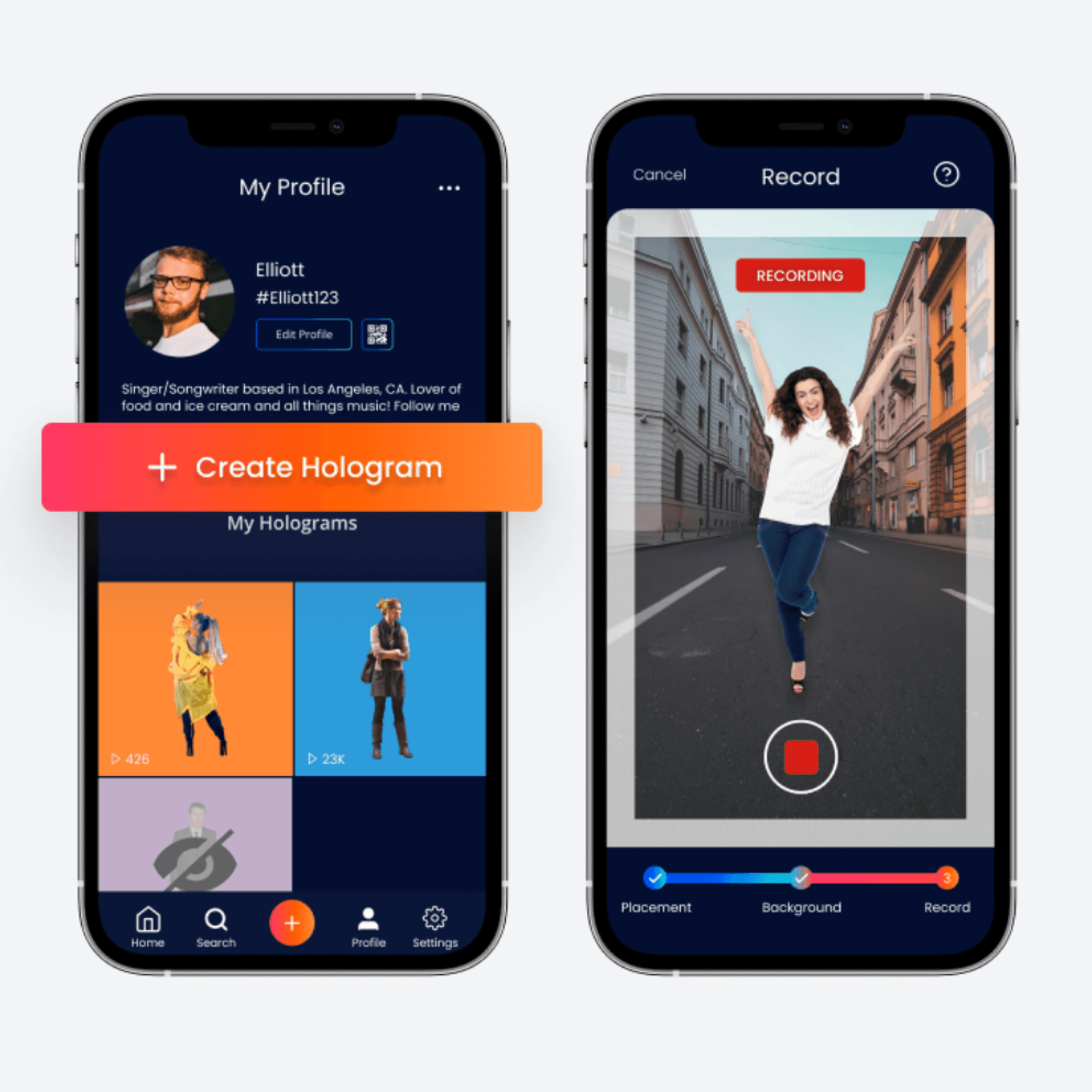
Hologram creation interface with real-time AR recording and editing capabilities
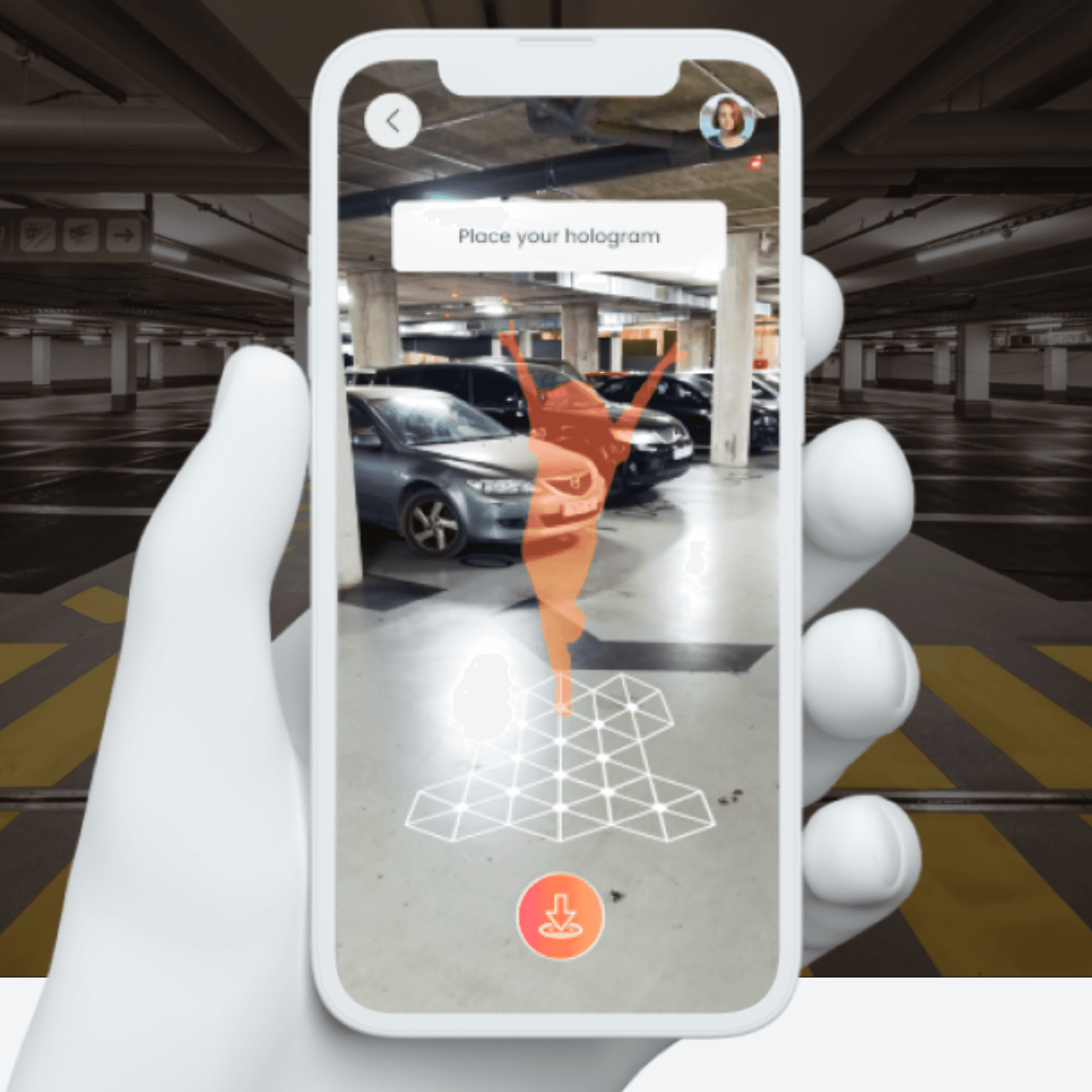
AR hologram viewing experience allowing users to place and interact with holograms in any environment
The simplest interface is often the hardest to design. Every tap we removed required in-depth discussion about what users actually needed versus what stakeholders wanted to show them.
But that constraint (making AR accessible to everyone) forced clarity. It taught me that great product design isn't about features. It's about removing everything between the user and their goal until only the essential remains.
That philosophy carried into my PM role: if a feature requires a PRD longer than 2 pages, we're probably solving the wrong problem.
The platform I designed continued to evolve, eventually becoming HoloX by Nextech AR.
Back to Home
© 2026 Katherine Ford