Making It Simple When Nothing About It Is
Sole Designer Across 6 Brands, 10 States, and 3 E-Commerce Platforms
Enterprise Scale
Regulated Industry
Design Systems
Multi-Brand
E-Commerce
As the only designer on a 4-person team, I unified six cannabis retail brands under The Cannabist Company, each with different markets, different e-commerce systems, and different state regulations dictating what we could and couldn't do. The result: a flexible design system that made every site feel like one family while respecting the legal, technical, and brand constraints that made each one unique.

Role
Sole UX/UI Designer
Timeline
2022 to Present
Team
Designer, Tech Lead, 2 Developers
Tools
The Company
The Cannabist Company operates approximately 50 retail cannabis locations across 10 states, along with wholesale cannabis brands. I was responsible for unifying the digital presence of six distinct retail brands under this umbrella.
Cannabist
Multi-State
Medical + Adult Use
Columbia Care
Multi-State
Medical + Adult Use

gLeaf
Multi-State
Medical + Adult Use
The Green Solution
Multi-Location
Medical + Adult Use

Medicine Man
Multi-Location
Medical + Adult Use

Patriot Care
Single-Location
Medical + Adult Use
Each brand serves different markets, customer bases, and regulatory environments.
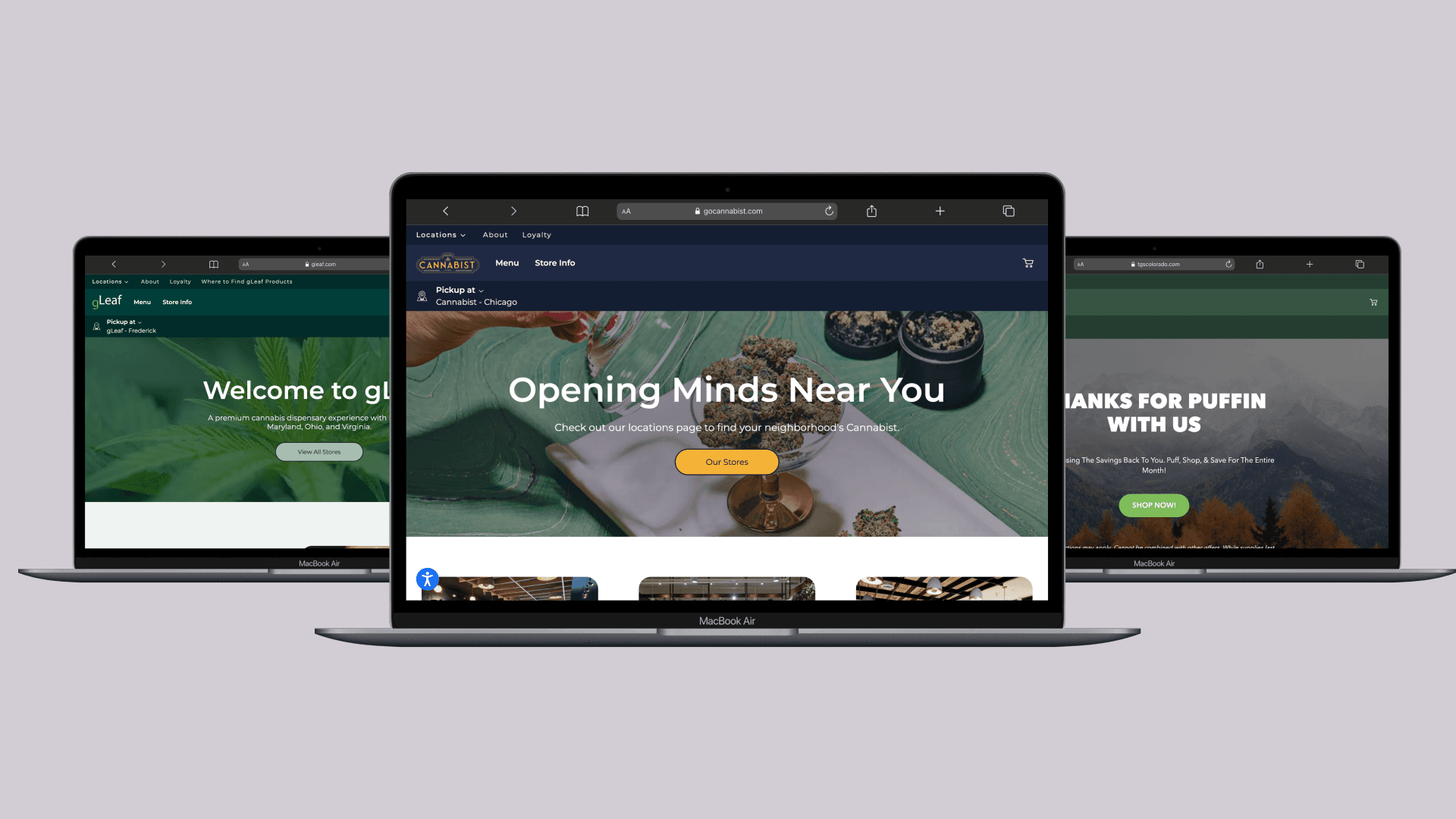
Same structure, different personality. Each site shares the same typography, navigation, and layout system while expressing its own color palette, imagery, and tone. The consistency is the design system. The variety is the brand.
The Problem
When I joined the project, the existing brand websites were scattered. Some were coded from scratch, some were on WordPress, some we could barely find. Branding was inconsistent, user experiences varied wildly, and menus were underutilized.
Then the ask came from leadership: we now had three different e-commerce menu systems across our brands, and we needed every website to look and feel consistent, even though the underlying technology was completely different for each one.
The business goals were everything at once: unify the brands, improve SEO, fix the user experience, launch new menus, improve conversions, and in some cases, rebrand entirely.
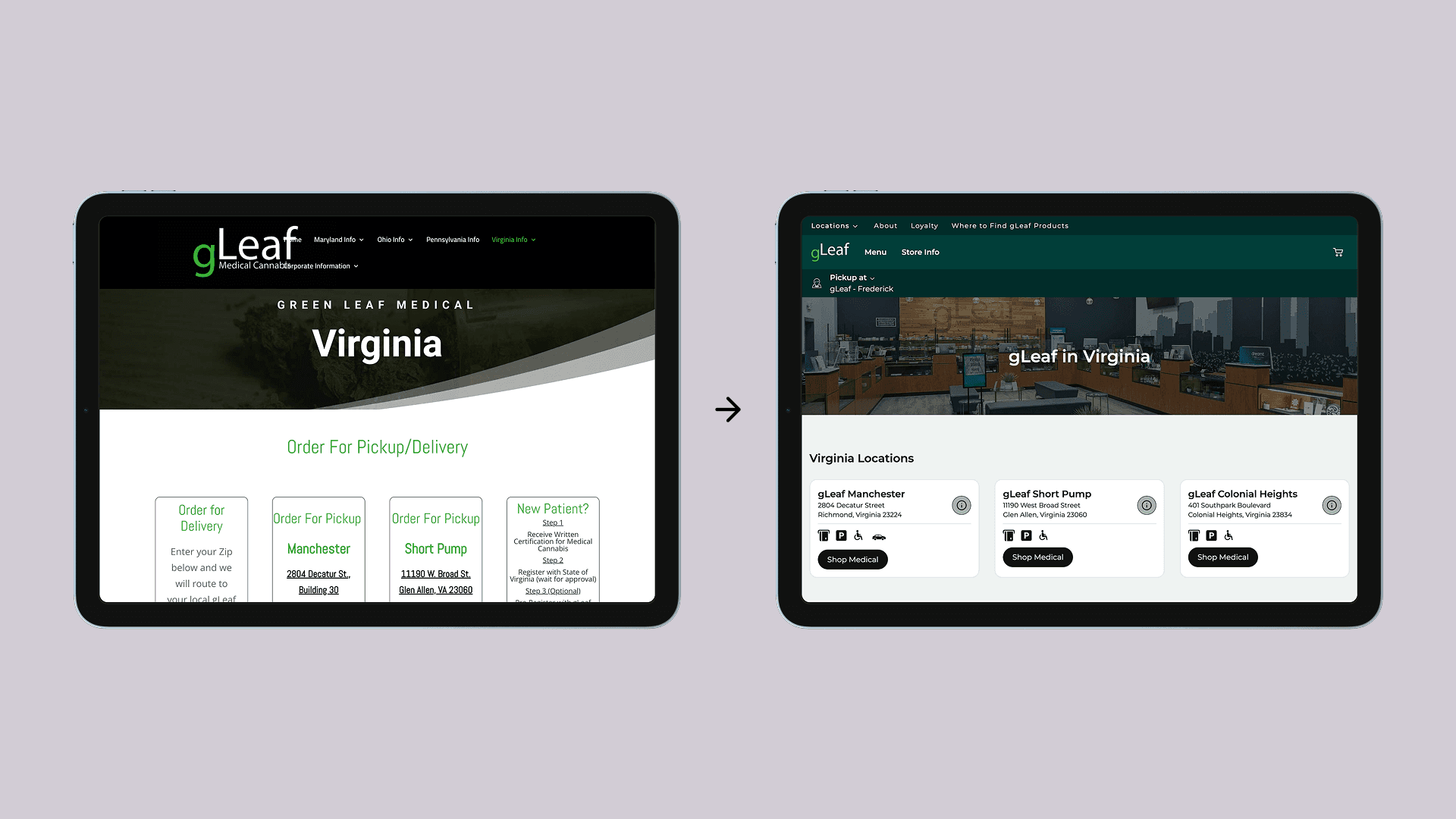
What I inherited vs. what I shipped. The original sites were a mix of WordPress builds, hand-coded pages, and inconsistent branding. The new system brought every brand into alignment without erasing what made each one distinct.
The Constraints
This project sat at the intersection of three types of constraints that don't usually overlap. Every design decision had to satisfy all three simultaneously.
Cannabis is one of the most heavily regulated industries in the country, and those regulations change state by state. Every design decision had to clear legal and compliance review before going live.
Ohio
Websites legally cannot connect to any other state. Ohio locations required their own subdomains, completely separate from the main brand sites.
I designed Ohio sites to be visually indistinguishable from the primary experience. Users wouldn't know the difference unless they checked the URL.
Maryland
Required users to input their actual date of birth for age verification, not just a simple "Are you 21+" confirmation.
Built a custom date-of-birth age gate that still felt quick and unobtrusive.
All States
Every state required an age gate, but implementation and strictness varied. Health claims, brand imagery rules, and advertising restrictions all differed.
Built a flexible system that could be configured per state without redesigning the page.
Medical vs. Recreational
Some locations serve medical patients, some recreational customers, some both. This affected what content, wording, and imagery could appear on each site.
Designed content modules that could swap based on the store's license type.
The six brands didn't just look different. They ran on completely different e-commerce platforms (some brands have multiple e-commerce platforms on one site!). I pushed to consolidate to a single platform and was told it wasn't possible. So I had to design around three separate systems and make them feel like one.
iHeartJane
Iframe Menus
Limited styling control. Had to design around what couldn't be changed.
Dutchie
Reverse Proxy
More design control. Custom integration within our site structure.
Sweed
Reverse Proxy
Had its own navigation system that I had to match to ours for consistency.
The CMS was custom-built in ContentStack, which gave us flexibility but meant everything was built from scratch. No templates to fall back on.
Six brands, six identities. I had to balance corporate consistency with brand individuality, often backing up my decisions with user research and data.
The system I designed: structure stays the same, personality flexes.
Stays Consistent
Typography
Page structure and layout
URL structure and IA
Navigation patterns
Component design system
Flexes Per Brand
Color palette
Photography and imagery
Tone of voice and copy
Brand logos and marks
Market-specific content
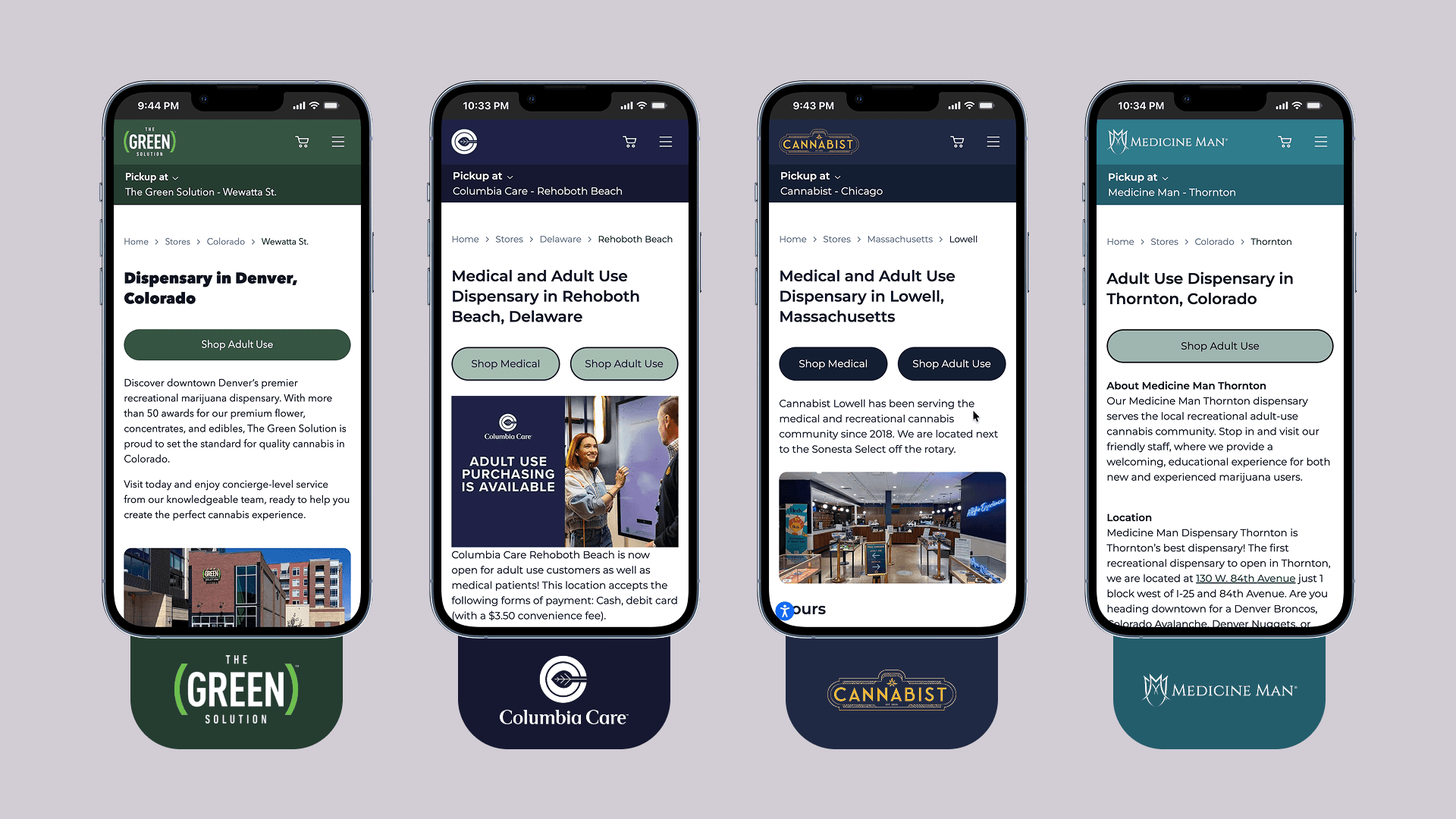
One store page template, four brand expressions. The bones are identical: same component structure, same information hierarchy, same navigation. The skin changes per brand. That's what makes the system scalable without being generic.
My Process
1
Discovery
Interviewed retail teams to understand how customers actually shop. Conducted competitive analysis of other cannabis sites, most of which were flat pages linking to a menu with minimal attention to SEO or cross-brand consistency.
2
Architecture
Built site maps, flowcharts, and information architecture for the unified system. Conducted a full site audit using Ahrefs to identify technical issues, broken structures, and SEO gaps.
3
Design System
Created comprehensive design systems for each brand: component libraries, style guides, and brand-specific documentation establishing the rules for what stays consistent and what flexes.
4
Iteration
Wireframes, prototypes, and many rounds of iteration driven by stakeholder feedback, platform changes, divestitures, compliance changes, and PostHog analytics.
5
Development and QA
Created tickets in Zenhub, worked directly with developers, reviewed QA, and presented to C-suite. Continued iterating post-launch through the present day.
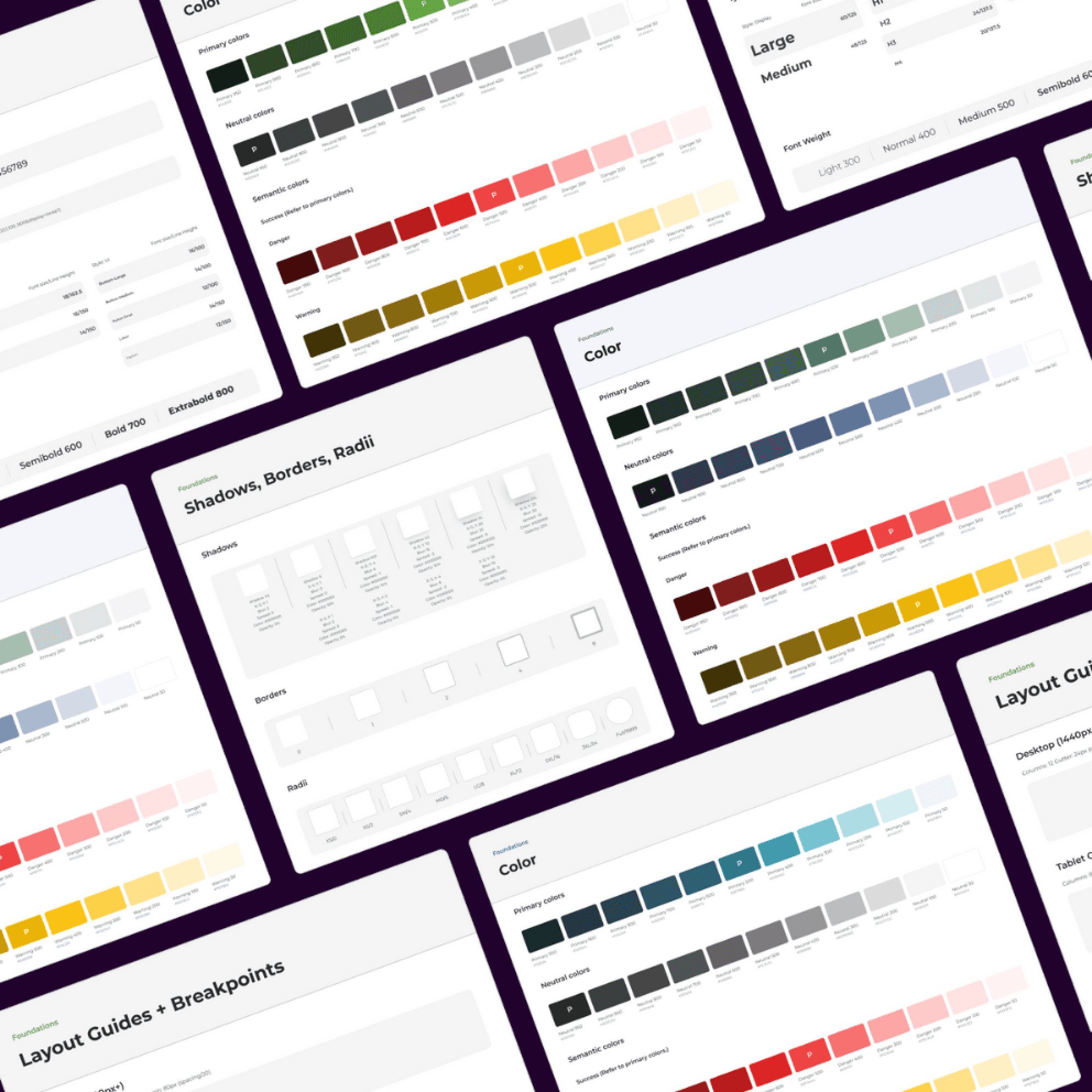
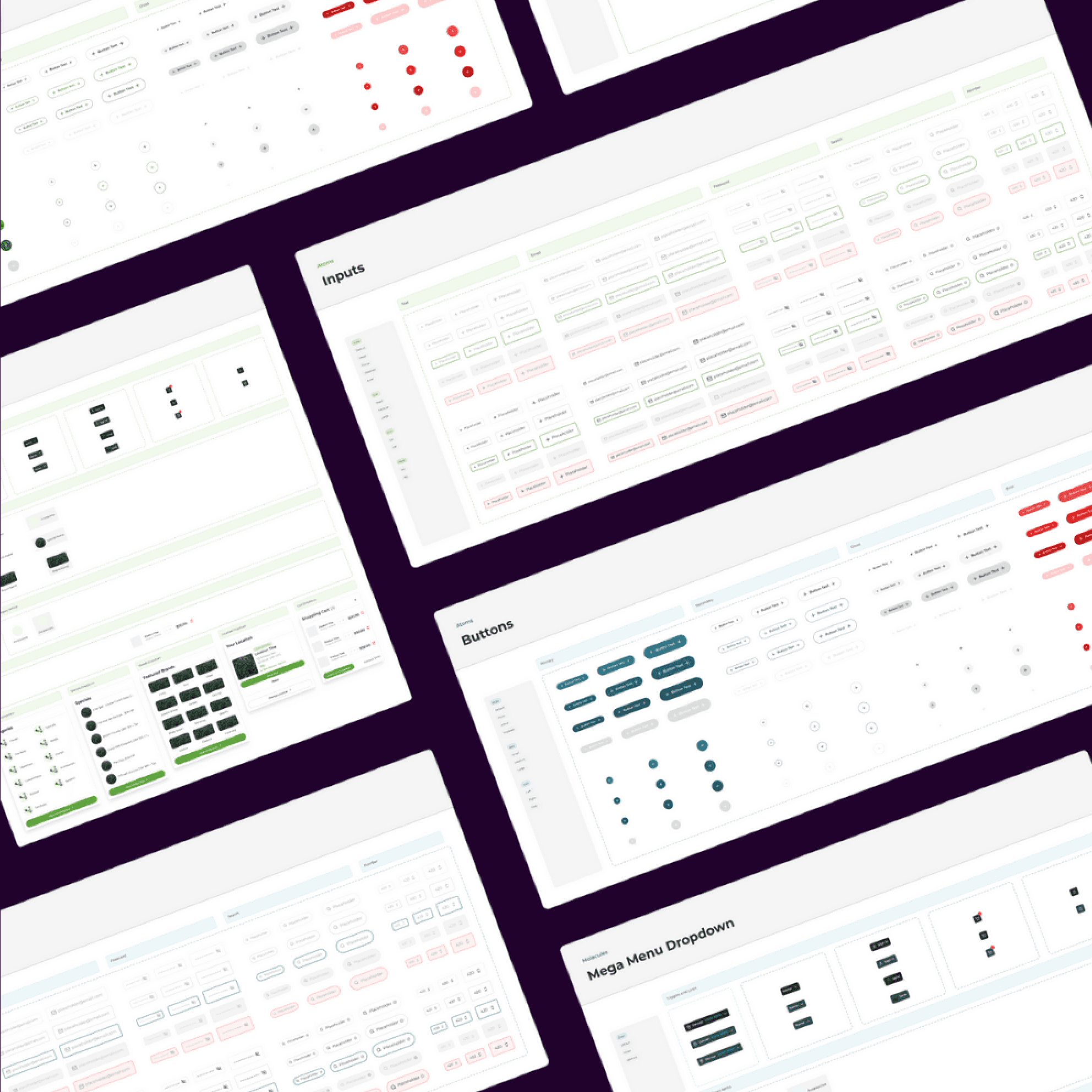
A look inside the Figma file. Six brand systems, shared component libraries, and brand-specific documentation, all organized to make handoff clean and updates fast across 50+ locations.
The E-Commerce Challenge
Cannabis e-commerce isn't like normal e-commerce. Customers can only preorder for pickup, or get delivery in very limited markets. Payment processing is complicated due to federal banking restrictions. And I was designing across three completely different menu platforms.
For iHeartJane's iframe menus, I had limited control, so I focused on making the surrounding experience feel seamless. For Dutchie and Sweed's reverse proxy setups, I had more control but had to match Sweed's native navigation to our pattern.
The hardest moment: pushing for a single e-commerce platform and being told it wasn't possible. That constraint forced creative problem-solving. I had to design a wrapper experience flexible enough to accommodate three different systems while feeling unified to the user.
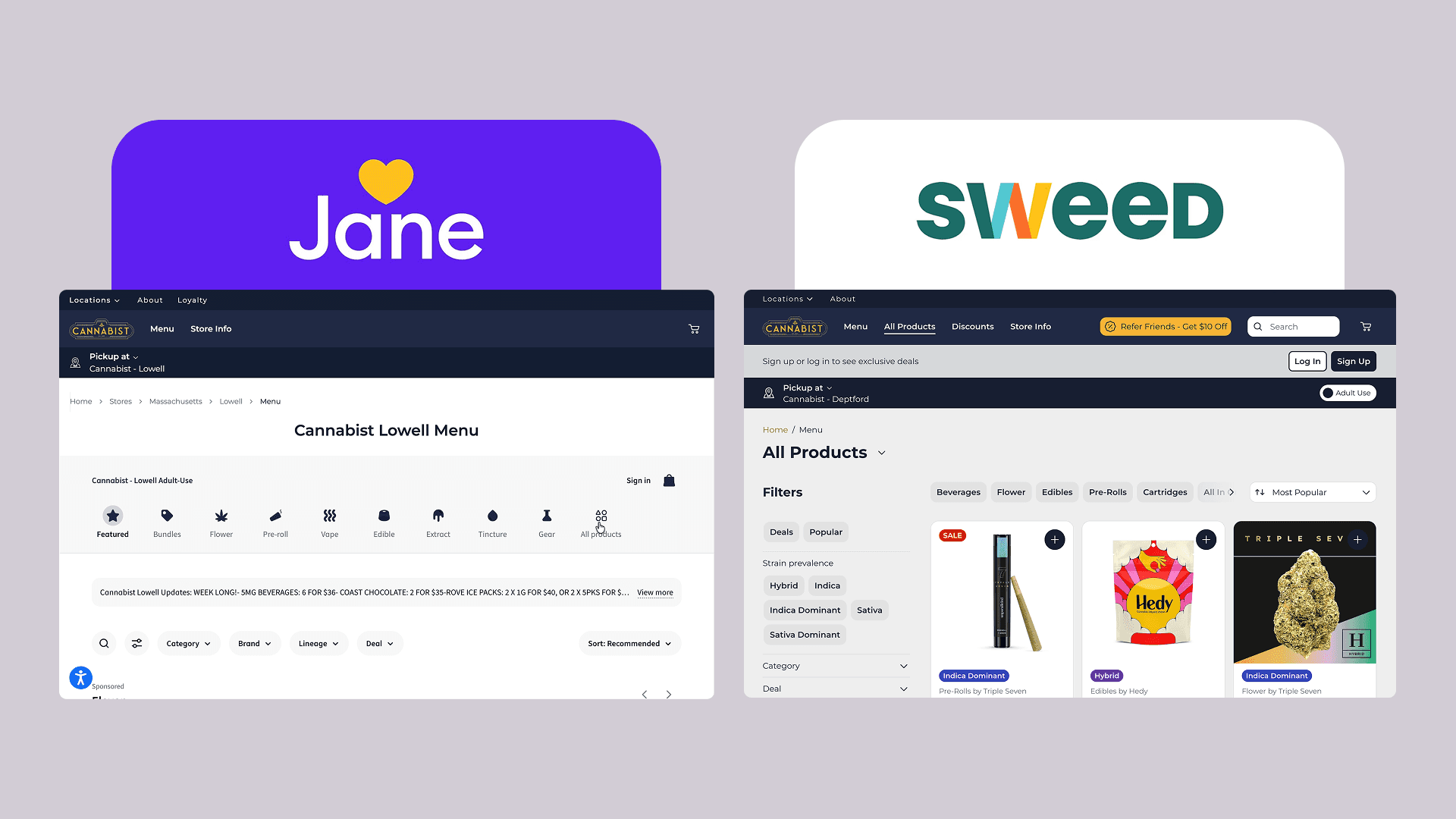
Two different e-commerce platforms, designed to feel like the same experience. The navigation, product layout, and visual hierarchy stay consistent even though the underlying technology is completely different.
Impact
Quantitative
NPS 67.6
Net Promoter Score across unified platform (1,381 responses), placing sites in top tier for retail e-commerce
96-99%
SEO performance scores across all six brands following site architecture and technical optimization.
91%
Neutral-to-positive user response to major UX changes (menu navigation redesign, 428 responses)
50+ Locations
Photography and SEO optimization project spanning entire retail footprint
Qualitative
Unified web presence across 6 brands, 10 states, 3 ecommerce platforms
System scaled to accommodate new store openings, divestitures, and compliance changes
Reduced operational update time for store hours, menus, and content from days to minutes
Improved site speed and technical performance across all brands
See It Live
The system I designed is still in active use and continues to evolve with new compliance requirements, store openings, and brand changes.
I also designed the corporate site at cannabistcompany.com
What I Learned
The thing I'm most proud of is how simple the final experience feels, considering everything going on behind the scenes. Six brands, ten states, three e-commerce platforms, ongoing compliance changes, legal reviews on every page.
None of that complexity is visible to the person shopping for cannabis on a Tuesday afternoon. And that's the point.
If I did it again, I'd push harder on front-end QA. With this many sites and this many rapid changes, keeping everything pixel-perfect was a constant challenge. But that's also what made the design system so valuable. Without it, maintaining six brands at this pace would have been impossible.
Back to Home
© 2026 Katherine Ford